// AI automation for businesses
Less routine.More time forwhat matters.
Sorting emails, reading documents, transferring information: we automate recurring tasks that your team does by hand today.
// Possible use cases
How your working day could get easier.
Three examples of what can be possible, not customer results. Some tasks can also be solved without AI using classic automation. We tell you that openly.
-
By hand today
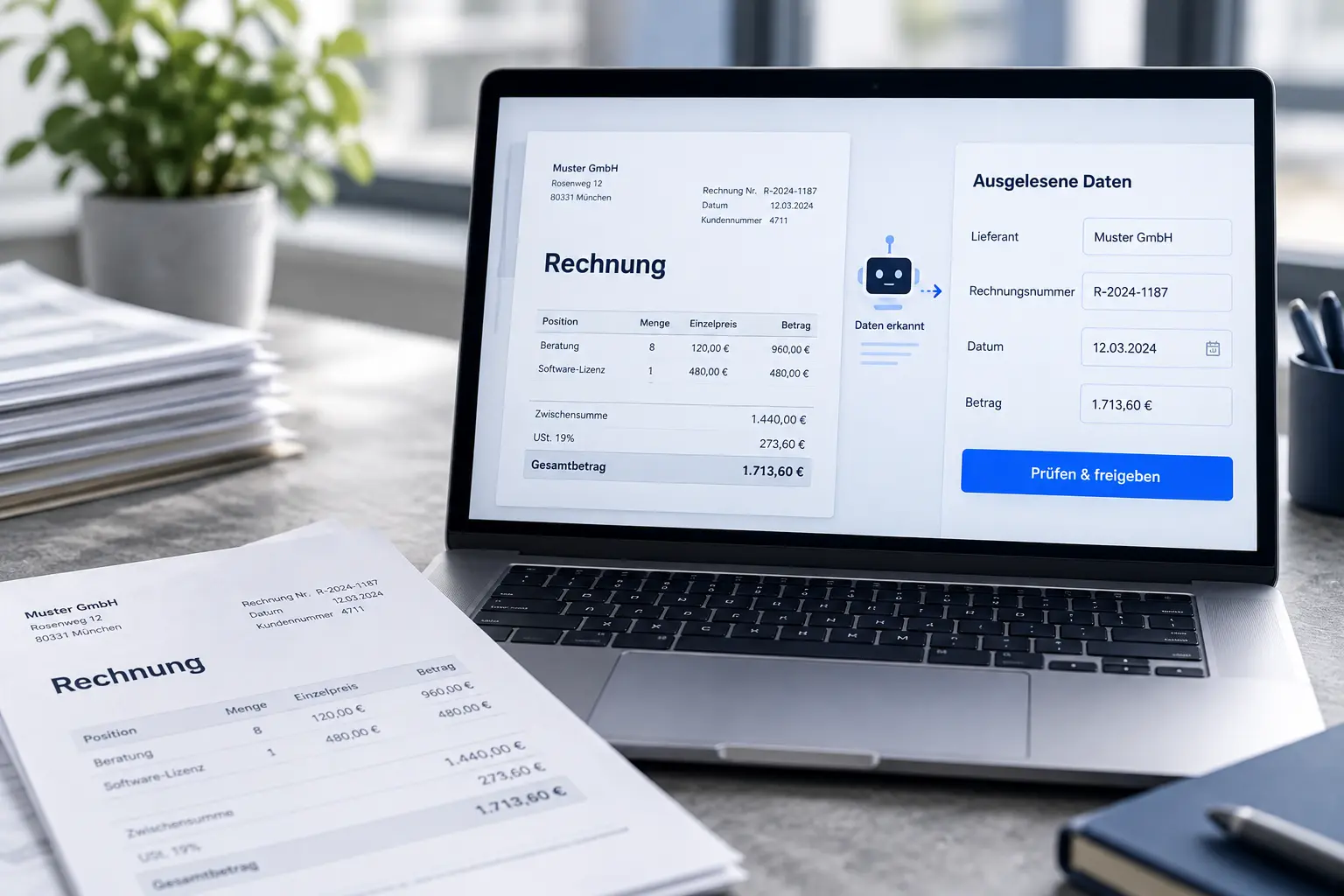
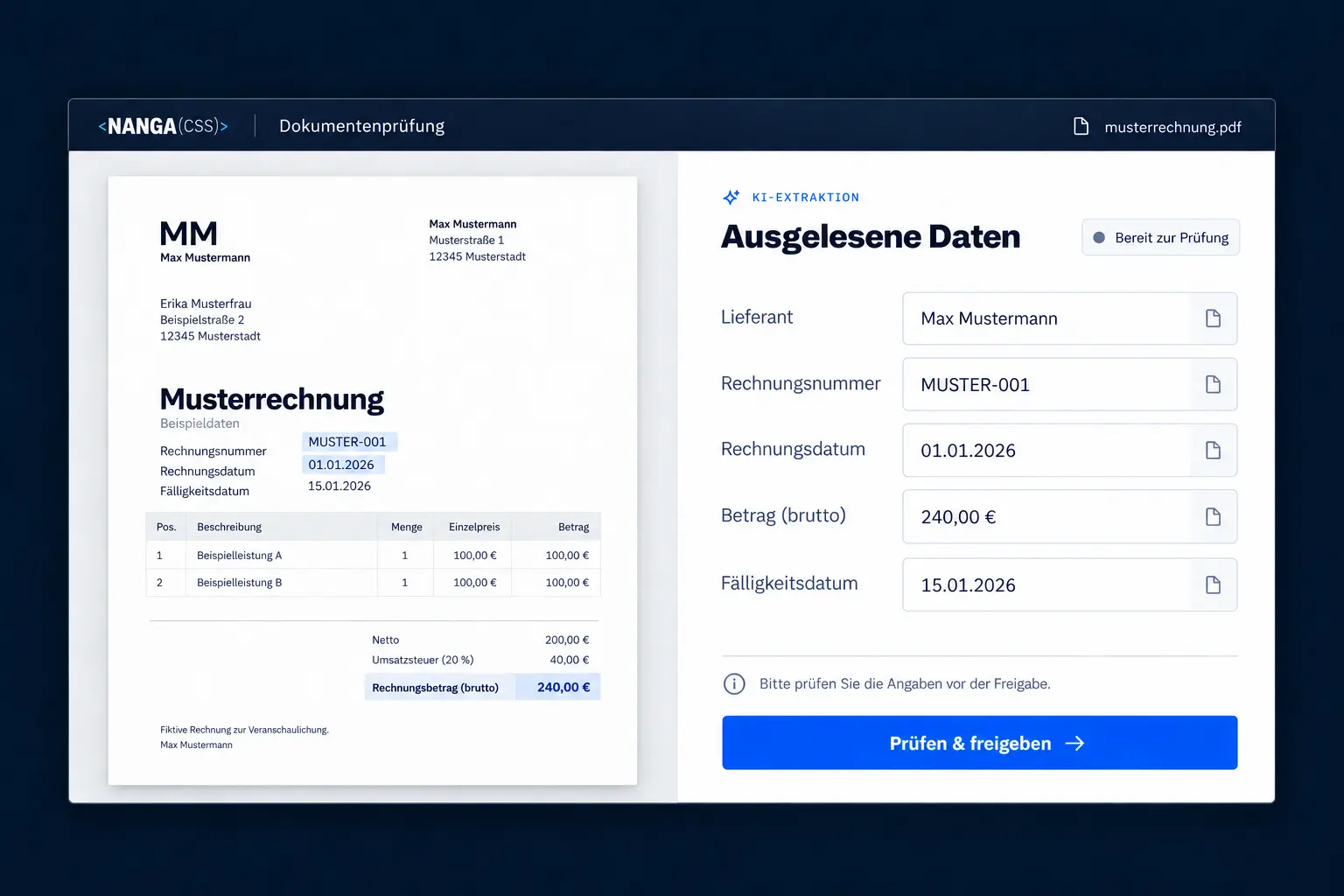
Typing invoice data from PDFs.
With a suitable automationData is extracted and prepared for review.
-
By hand today
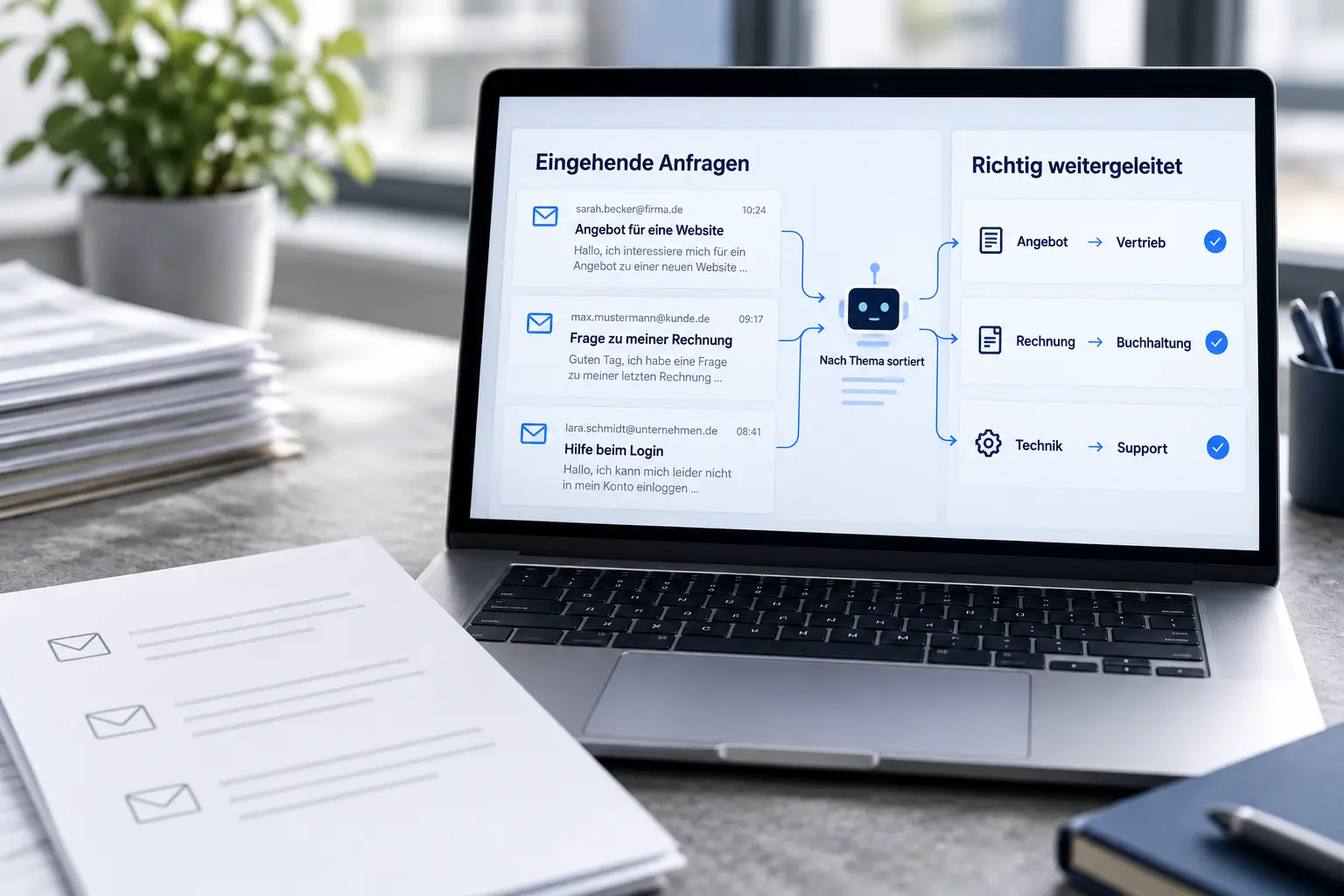
Distributing incoming enquiries one by one.
With a suitable automationEnquiries are pre-sorted by topic and forwarded.
-
By hand today
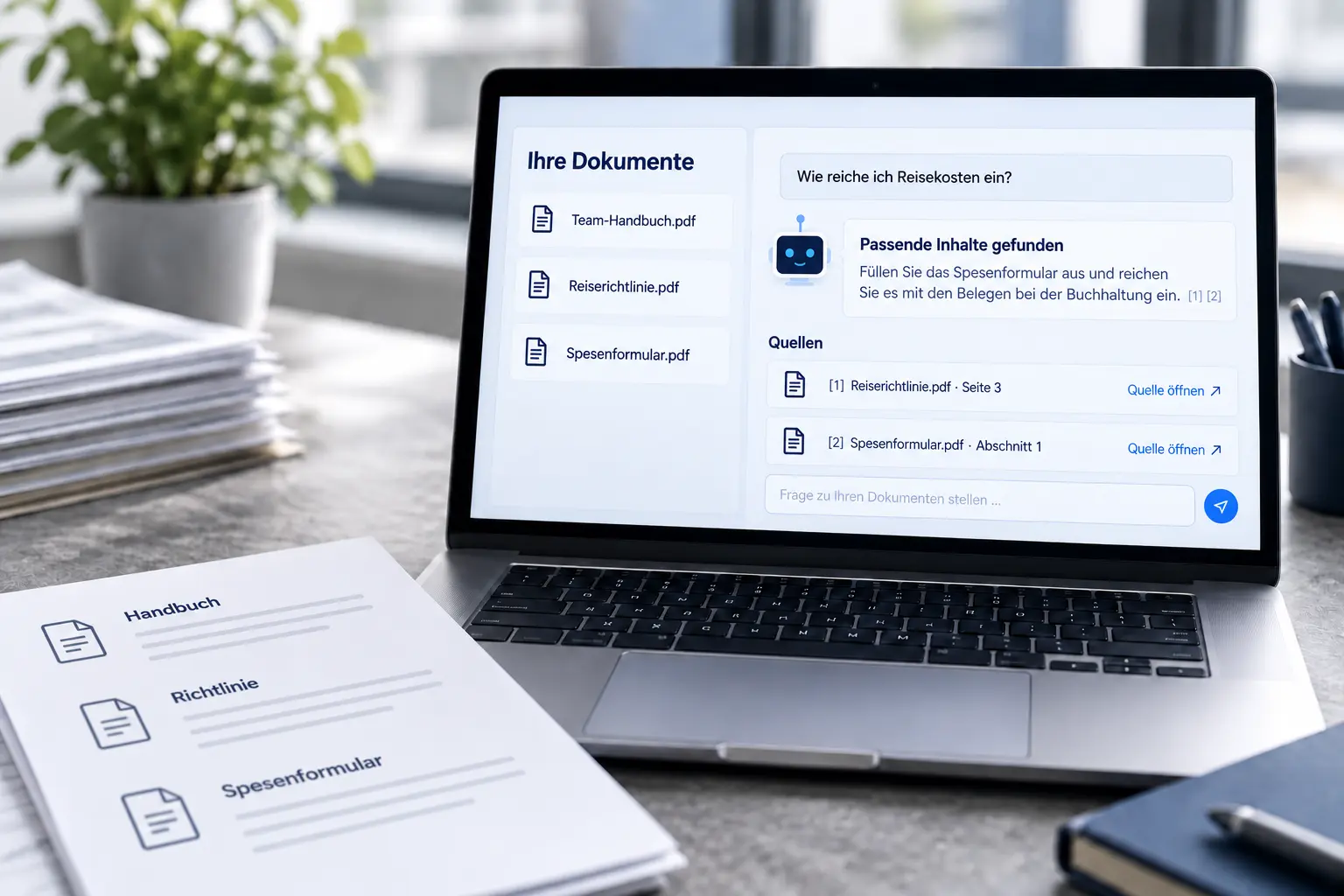
Searching for information across several documents.
With a suitable automationAn internal assistant helps find relevant content with sources.
// Control
You stay in control.
Together we decide which steps run automatically and where your team reviews or approves. How confidential data is handled is also clarified before implementation.
Data access
Which information may the solution use?
Review
How are results and errors checked?
Approval
Which actions need your consent?
// Pilot
Let’s start with one task.
We choose a clearly defined process, test the solution with sample data and check whether it reliably helps in everyday work. Then you decide on the next step.
- Choose a taskA clearly defined process.
- Test with sample dataThe solution first runs with examples.
- Check in everyday useDoes it help reliably?
- You decideYou determine how it continues.
Not sure which task fits?
Start AI checkQuick check: which task is suitable? (five questions)
// FAQ
Frequently asked questions
Recurring tasks with digitally available information are well suited, such as sorting emails, reading documents or transferring data to another program. Less suitable are tasks where every case is completely different or where important decisions should be made without review.
If the steps always run the same way and the data is clearly structured, fixed rules and connections between your programs are often enough. AI is only needed when texts, documents or enquiries are worded differently. We recommend what fits your task, even if that is not AI.
Errors can never be fully ruled out with AI. That is why we define which results your team reviews before anything is processed further. Uncertain cases can be flagged for manual review, and the solution is adjusted based on errors.
That depends on the process. Typical are examples of the emails or documents concerned, narrowly limited access to the programs involved and a contact person who knows the process. Which data may be used is clarified with you before implementation.
Usually not. The automation is connected to your existing programs. The prerequisite is that they offer an interface or a data export. We check this at the start.
The effort depends on the number of steps, the quality of the data and the integrations. Ongoing costs typically arise for running the solution and, if used, for AI services. In the pilot we estimate both based on real examples.
Discuss your project.
Briefly describe what you are planning. In the initial consultation we work out the goal, the starting point and sensible next steps together.